These works are for sale
Josef Ongenae
Josef Ongenae (1921-1993) is a Belgian artist, he is self-taught and has no art training. All his life he has been interested in Western and Eastern philosophies and religions. As a teenager he sails around the world on a merchant ship. In 1939 he started working as an apprentice draftsman at an advertising agency. When Ongenae hides with his cousin in Antwerp during the Second World War to avoid employment in Germany, he meets two artists who have a studio at the same address. One of them is the Dutch painter Jan Cox, who introduces him to the work of artists such as Georges Braque, Wassily Kandinsky and Pablo Picasso.
Early work
Cox is an important promoter for Ongenae; he encourages him to draw. The works that Ongenae then creates are clearly inspired by Cubism. The paintings – mostly landscapes and still life – that were created after the Second World War also show the influence of late Cubism. Although they are becoming increasingly abstract. His interest in abstract art is sparked when he meets the Dutch sculptor André Volten in Brussels. The two become good friends and Ongenae visits Volten several times in Amsterdam. In the Stedelijk Museum he sees the abstract work of Kasimir Malevich and Piet Mondriaan. He is so impressed by this that slowly but surely all figuration disappears from his own work.
Abstraction
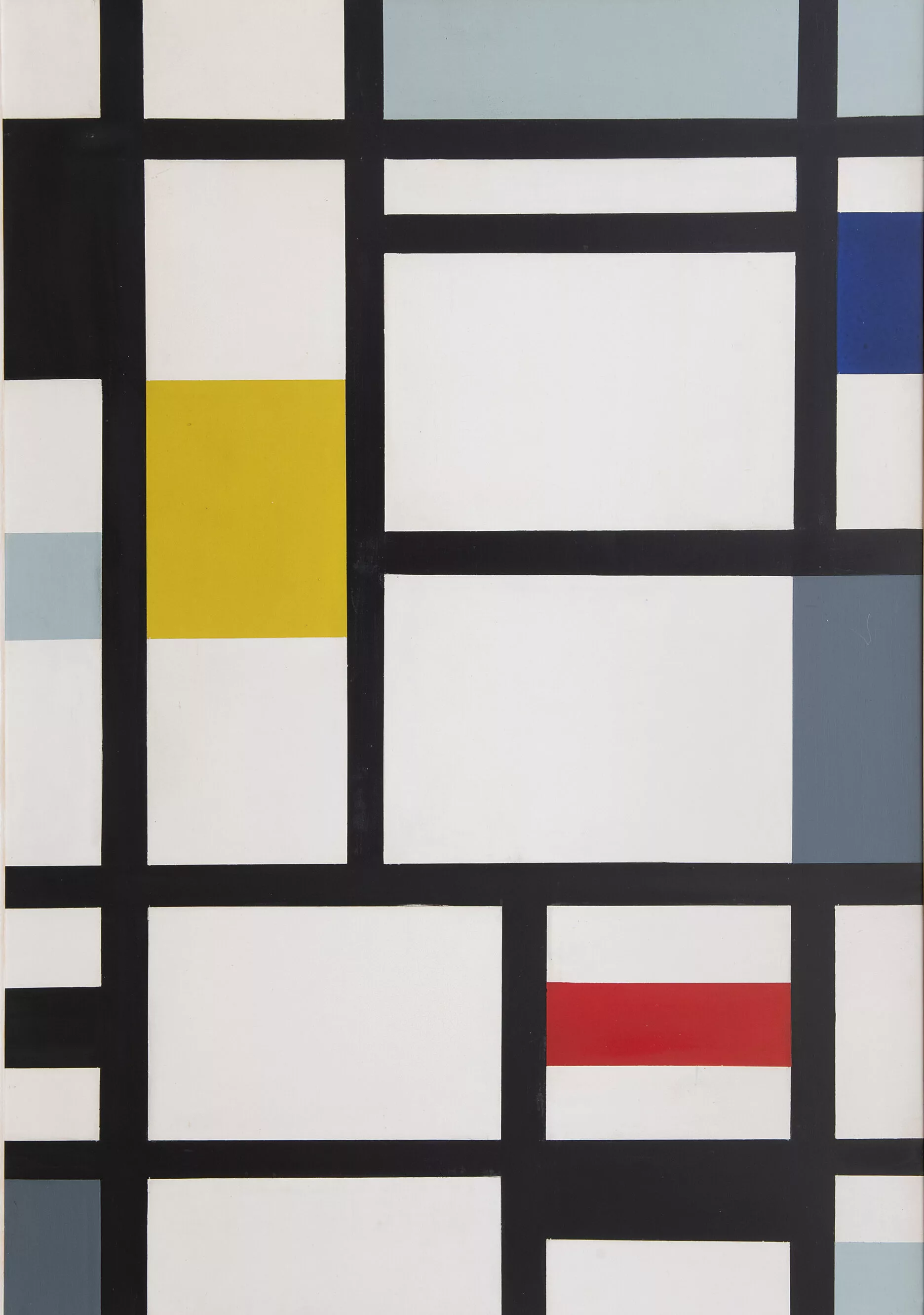
In 1953 Ongenae settled permanently in Amsterdam. He briefly became captivated by the work of Theo van Doesburg and Bart van der Leck, causing him to create several diamond-shaped paintings. From the mid-1950s he painted compositions consisting of horizontal and vertical triangles, squares and rectangles on a white background; that work has a great affinity with Mondriaan's paintings. When Mondriaan's influence on his own work begins to feel like a burden, Ongenae stops painting for a while. He is looking for his own style, which would only crystallize in the 1960s. In 1986, seven years before his death, he stopped painting. He dies in Amsterdam. The Stedelijk Museum in Amsterdam, among others, has work by Ongenae in its collection.