These works are for sale
Erik Andriesse, a virtuoso artist
Erik Andriesse (1957-1993) was an ambitious, but above all, a virtuoso artist. A child prodigy, too; he exhibited his paintings at a young age. Born in Bussum, Andriesse was also headstrong and independent: he paid little attention to trends in the art world and followed his own path entirely.
After high school, he went to Ateliers ‘63 in Haarlem (the predecessor of De Ateliers, a renowned training institute). But Andriesse did not enjoy himself there. The emphasis was too much on abstract art, and he did not care much for that.
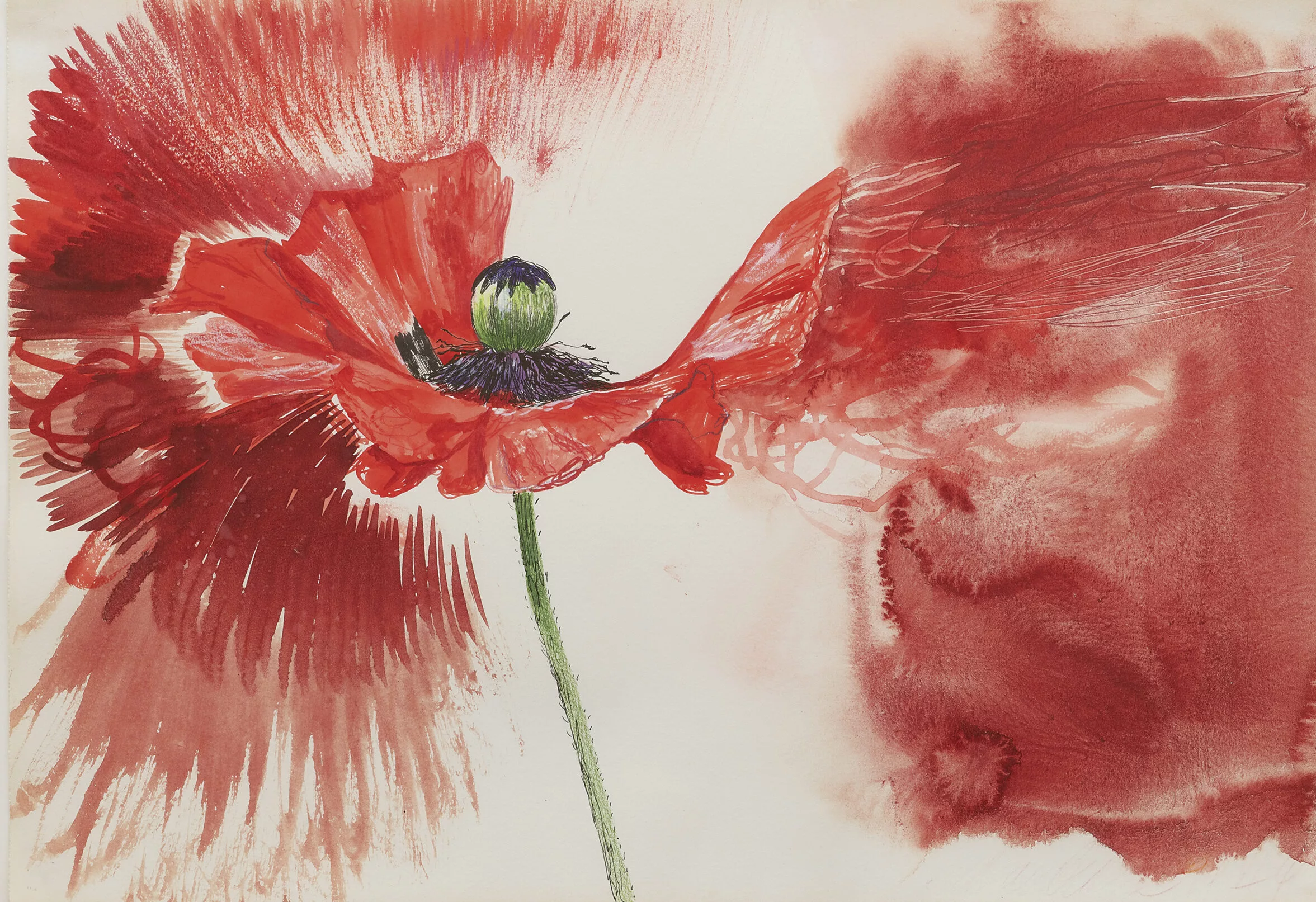
His heart lay with nature. Andriesse painted flowers, lots of flowers. He painted mainly amaryllises and sunflowers, but also lilies, orchids, and magnolias. Flowers with lush forms in exuberant colors. For Andriesse, it was all about the intensity and power of color. The artist possesses not only an excellent sense of color but also a good sense of composition. Andriesse always paints from live models: he buys the flowers at the market that serve as models for his paintings in his studio.
Later in his career, Andriesse adds animals to his subjects. Flowers and animals remain his most important subjects, although skulls are another favorite topic. He has made hundreds of drawings of skulls. For him, flowers and skulls symbolize the cycle of life. Andriesse is fascinated by themes of life and death.
His trip to Bonaire has a major influence on his work. He is impressed by the richness of the tropical sea there. He incorporates the wondrous forms and intense colors of lobsters, turtles, and shells he sees there into his new work. In 1988, he wins the prestigious Prix de Rome for his graphic art.
Shortly before his untimely death—he passes away unexpectedly in 1993 at the age of only 35—he becomes interested in making ceramics. He went to the European Ceramic Work Centre in Den Bosch and threw himself into creating a series of ceramic bowls and vases. He decorated this work exuberantly with themes familiar to him: animals and skeletons. Only after his death was this ceramics exhibited for the first time.