These works are for sale
About Eugène Brands
Eugene Brands participated in the group exhibition ‘Young Painters’ at the Stedelijk Museum in Amsterdam in 1946. His innovative work impressed the other exhibitors, and Eugene Brands was persuaded to join the Experimental Group. Eugene Brands maintained contact with the Stedelijk Museum, which led to the ‘International Exhibition of Experimental Art’ in 1949.
Meanwhile, the COBRA movement had also been established by painters such as Constant Nieuwenhuis, Karel Appel, and Corneille, and the experimental group merged with it. The large group exhibition at the Stedelijk was effectively the first public presentation of COBRA, and various works by Eugene Brands were on display there. His work from that period showed a kinship with the sensitive abstract work of Piet Ouborg. Eugene Brands also had an interest in primitive folk art, of which the music particularly appealed to him. He attempted to incorporate the magical elements of these cultures into his work.
The innovative work of the COBRA painters was not understood and aroused great anger among the public and the press. Following a disagreement regarding the exhibition, Eugene Brands left the COBRA group and withdrew into his painting studio. This self-imposed isolation lasted approximately ten years.
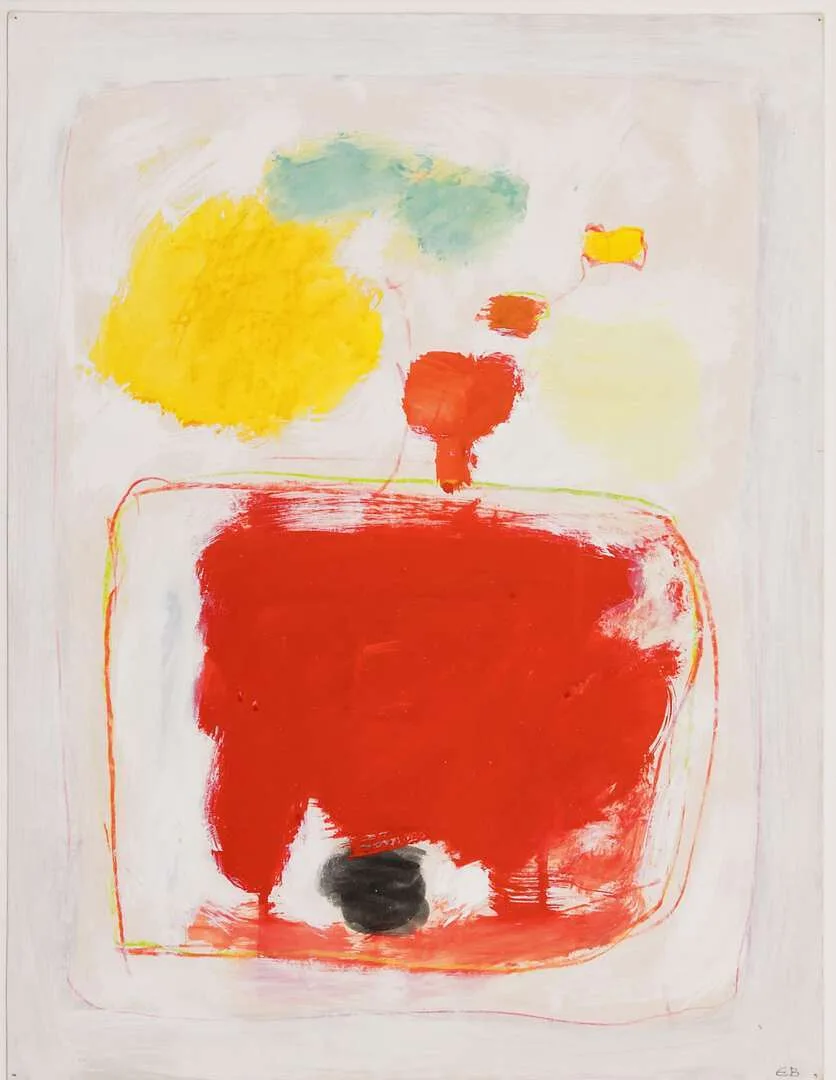
During this period, he created work inspired by children's drawings. The spontaneous drawings of his young daughter Eugenie fascinated Brands and served as a grateful source of inspiration. The spontaneous expression with which he depicts the magical world of a child was a typical COBRA characteristic. He was also influenced by the work of Paul Klee and Marc Chagall. Eugene Brands' childlike representations gradually took on a fairytale atmosphere, in which people or objects fly or float. Beautiful small works, mostly oil on paper and gouache, were the result.
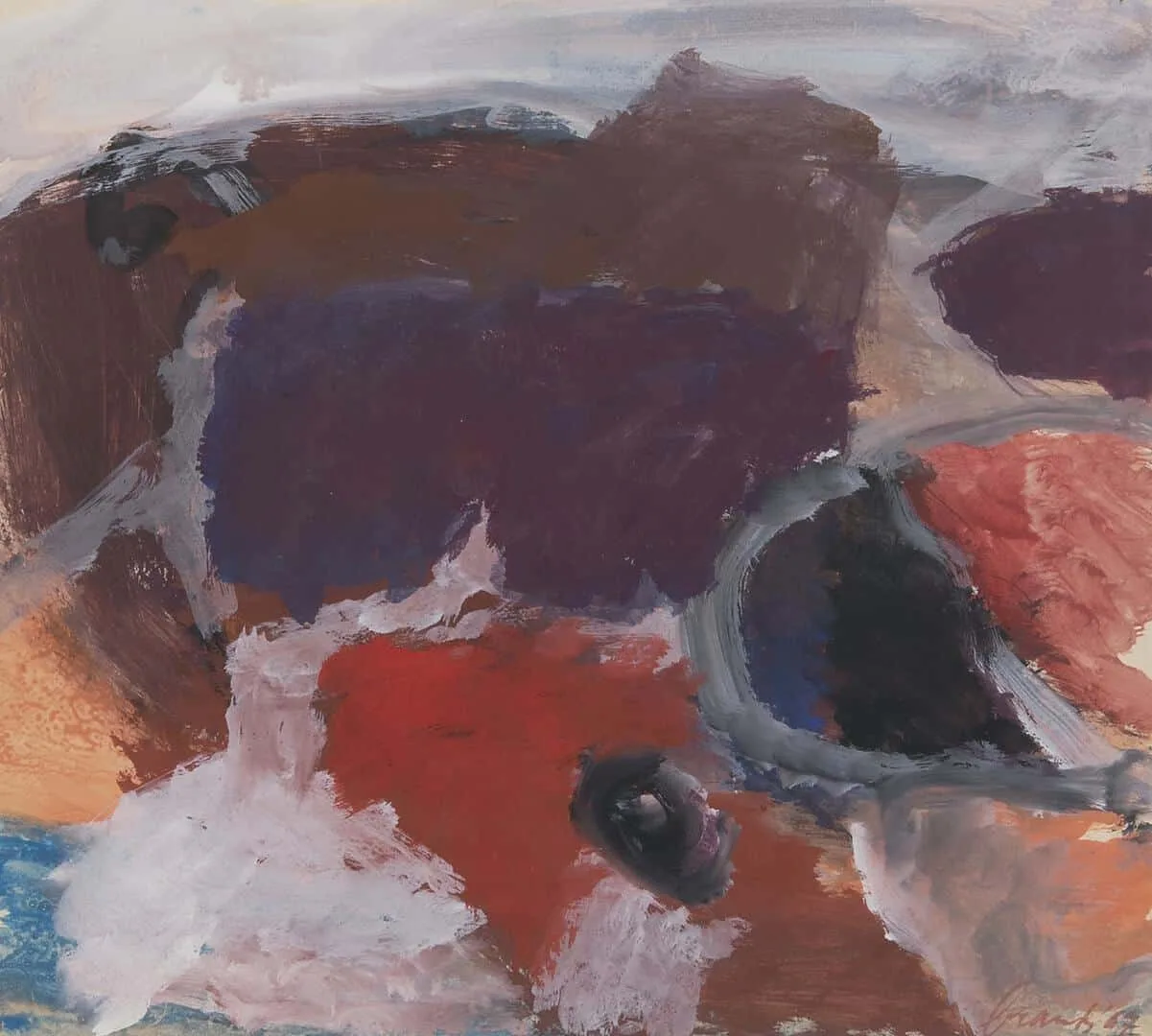
Under the influence of American abstract expressionism, abstraction returned to Eugene Brands' work around 1960. His canvases became larger, and his painting style more woolly and sweeping. The mystery of the universe, a central theme in his work, was prominently present. He began painting shimmering planes of color in soft, poetic hues, an impenetrable, cottony substance.
From 1967, Eugene Brands worked as a teacher of free painting at the Royal Academy of Art in Den Bosch. The abstracted landscapes with ‘cow spots’ and cloud formations date from this period; they were inspired, among other things, by the landscapes Brands saw from the train.
Eugene Brands worked in Amsterdam, Nunspeet, and later in the South of France until a ripe old age. His work is held in numerous private and museum collections.