These works are for sale
A Pioneer of the Groninger Ploeg
Jan Altink is considered one of the most important painters of the Groninger Ploeg. He was a co-founder and the namesake of this expressionist movement, founded in 1918. Jan Altink began his art education at the prestigious Academie Minerva in Groningen. There he obtained his teaching certificate in drawing and started his career in 1912 as a teacher at the Evening Vocational Drawing School in Middelstum.
The Influences and Evolution in Style
In his early period, Jan Altink painted outdoors frequently on the advice of his Minerva teacher FH Bach. The grey palette of his mentor resonates in Jan Altink's work. After 1920, influences from Vincent van Gogh also become visible in Altink's work, who then works in a moderate expressionist style. In-depth Introduction to German Expressionism
Through Jan Wiegers, who had come into contact with Ernst Ludwig Kirchner in Davos, Jan Altink became acquainted with German Expressionism. The first results of this can be seen around 1923: Altink paints with an erratic brushwork and works with a high-contrast palette and a planar composition. The vibrant use of color is characteristic of this phase in Jan Altink’s painting, which can be considered the pinnacle of his oeuvre. During this period, Jan Altink, like other members of De Ploeg, often worked with wax paint. This is a mixture of oil paint, beeswax, and gasoline that could be applied thinly. This method was also borrowed from Kirchner.
Towards Impressionism
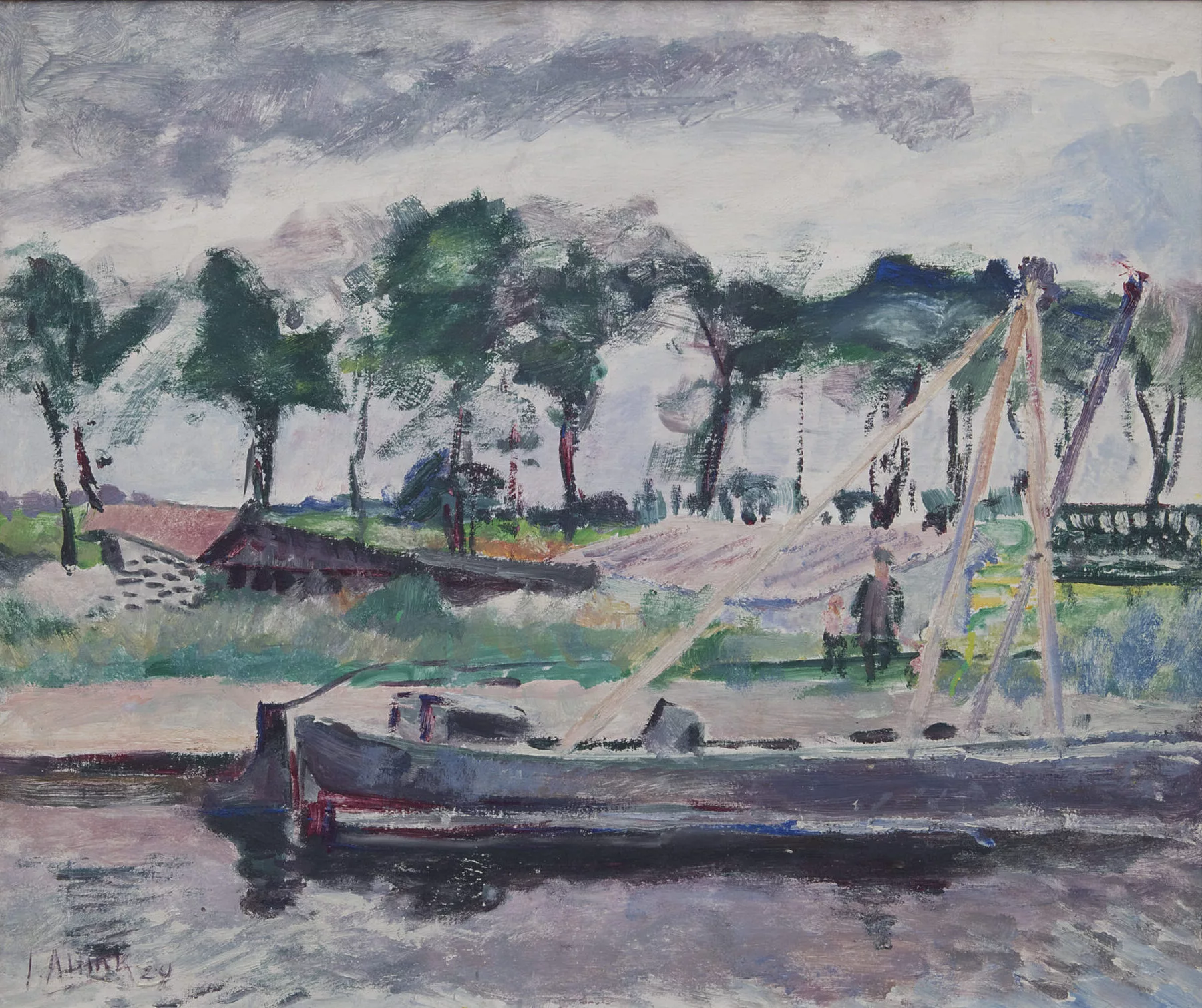
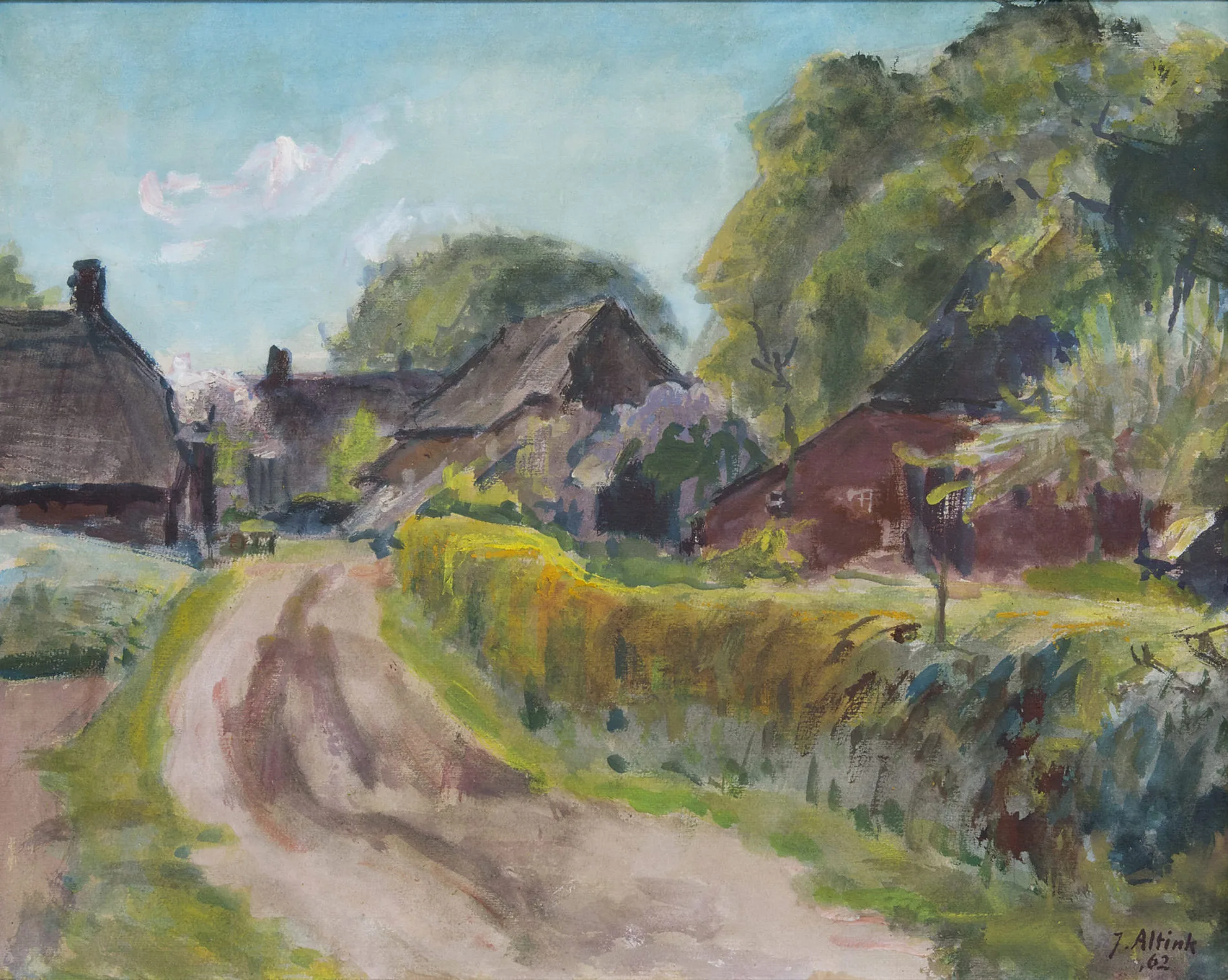
From 1926 onwards, Jan Altink distances himself from his Kirchnerian painting style; the expressionist palette gradually disappears from his artwork. This shift is observable in both his portraits and landscapes. He painted in a more impressionistic style and worked with more harmoniously coordinated light colors. During this period, Jan Altink created various works at Blauwborgje and the Reitdiep, in which humans and animals are often absent. The somewhat ethereal-looking works are reminiscent of those of fellow Ploeg painter Job Hansen, with whom Altink spent a lot of time during this period. In 1930, Jan Altink married Nelly Hubbeling. From the 1930s onwards, Vincent van Gogh once again became an important source of inspiration. During that period, Jan Altink continued to work diligently in the Groningen countryside and Drenthe. He also undertook various trips abroad, including to Switzerland and France. In his later period, the painter sometimes fell into repetition and worked in a more traditional style, but beautiful works also emerged that expressed his admiration for the Groningen landscape. In the 1950s, expressionistic colors returned somewhat to his work. In addition to landscapes, Jan Altink also painted still lifes. To earn extra income, he also worked as a commercial artist and portraitist. A highlight in that latter area was the commission to create an official portrait of Queen Juliana in 1949. Jan Altink remained an active painter until his death; it was his passion and his life. He once said of this himself: "If I do not paint, it is as if I cannot talk about anything."
A Life Dedicated to Painting
Jan Altink's artistic journey was characterized not only by his painting but also by his involvement with the Groninger Ploeg. He was a committed member of the Groninger Ploeg and would hold various positions, including secretary, treasurer, and jury member for Ploeg exhibitions. Jan Altink's legacy is reflected in his works, spread across museums such as the Groninger Museum, Stedelijk Museum Amsterdam, and Museum Belvedere in Heerenveen. His contribution to the Groninger Ploeg and his enduring artistic commitment will always be remembered as a valuable part of art history.